Plug-In Solar Kit
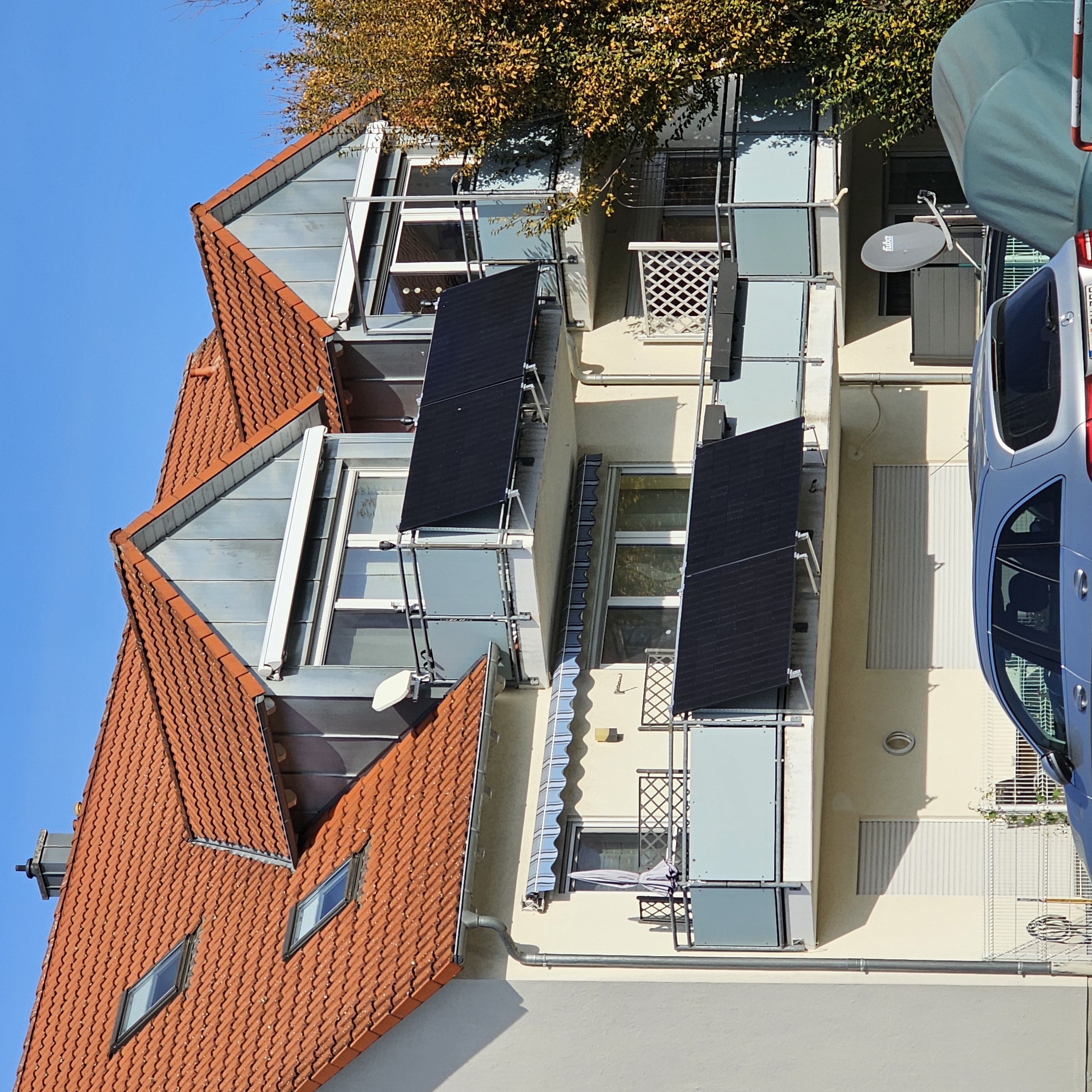
Balcony solar — also called plug-in solar or “solar generators” — are 200–800W systems that mount on a balcony railing, patio, or south-facing wall and plug into a standard outlet. No electrician, no permits, no roof access, no landlord approval required. In California, where retail electricity rates run $0.25–$0.45/kWh, even a 400W system offsets meaningful money.
This is solar for people who can’t wait. You take it with you when you move.
The panel produces DC power → a micro-inverter converts it to AC → you plug it into your wall outlet. Your home uses that power first before drawing from the grid. Your meter literally runs slower (or backwards, if your utility allows). No batteries required, though you can add them.
Step-by-step action plan
Check your space: balcony, patio, or south-facing window
You need a spot with direct sunlight for at least 4–6 hours per day. South-facing is best. East or west works but produces 20–30% less. Shade from buildings, trees, or overhangs significantly reduces output. If your only outdoor space faces north, this may not be worth it.
Measure the space: a 400W panel is roughly 2ft × 4ft. Most balcony kits come with a railing clamp or stand for ground mounting.
Choose your kit: Anker SOLIX or EcoFlow
Two systems dominate this category in the US right now. The Anker SOLIX RS40P (400W, ~$500) is purpose-built for balcony solar with a clean railing mount and one-app setup. The EcoFlow PowerStream (~$600–$900 depending on panel size) integrates with EcoFlow batteries, so you can add storage later.
Order and set up — takes about 30 minutes
Most kits arrive in one box. You attach the panel to the mount, run the cable to the micro-inverter, and plug it in. The Anker SOLIX RS40P specifically uses a Schuko plug with a built-in safety chip (limits output to 800W, the European standard for balcony solar). In the US, it plugs into a standard 15A outlet.
Download the app, scan the QR code on the inverter, and you’ll see live production in real time.
Notify your utility (required in most CA jurisdictions)
California law generally allows plug-in solar without permits, but many utilities require a simple notification for systems under 1kW. This is not an approval process — you’re just telling them you have it. Check your utility’s interconnection page or call. For systems under 1kW on existing wiring, approval is typically automatic.
Maximize output: angle, placement, and timing
Tilt the panel toward true south at an angle equal to your latitude (~34° for LA, ~37° for SF). Clean the panel with a damp cloth every few months. The best time to use high-draw appliances (dishwasher, laundry) is midday when production peaks. You’ll use that solar power directly instead of exporting it.
Top kits: side-by-side
400W, railing or ground mount, Anker app, built-in safety chip. Best for straightforward setups.
Shop Anker SOLIX →800W, adds to EcoFlow battery ecosystem, smart home integration. Best if you want to expand to storage.
Shop EcoFlow →Portable, folds up, pairs with Jackery power stations. Good for renters who move often.
Shop Jackery →200W foldable panel, pairs with Bluetti batteries. Budget entry point.
Shop Bluetti →Most apartment leases don’t address balcony solar specifically. A panel on a stand (not bolted to the building) is almost never a lease issue. Drilling into a railing or wall is — ask your landlord first. Ground-mounted or railing-clamp options avoid this entirely.
Panel specs, inverter comparisons, cable sizing, and your rights as a renter under California SB 1120 — all on one page.
Plug-In Solar Complete Guide →